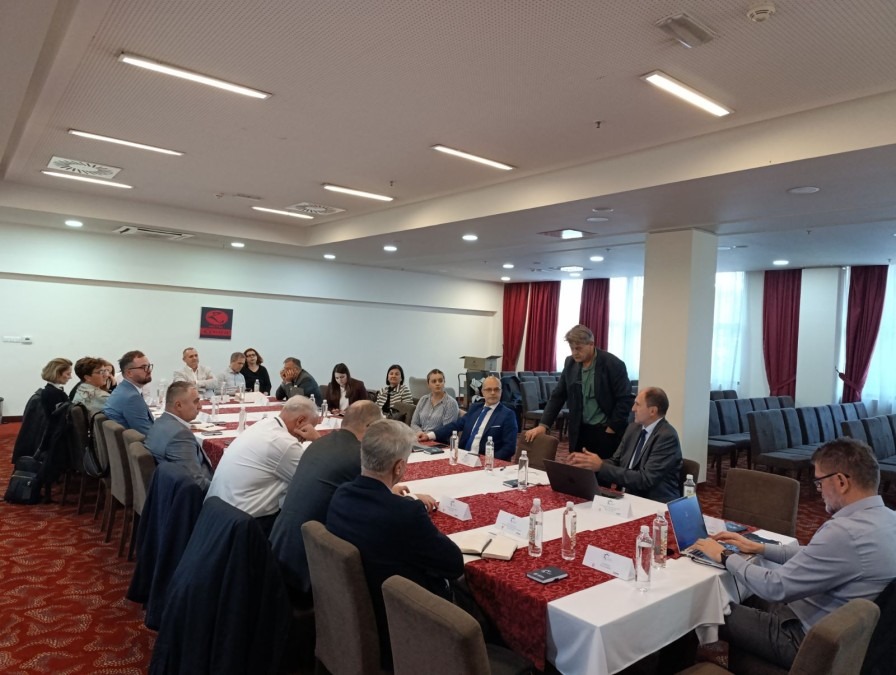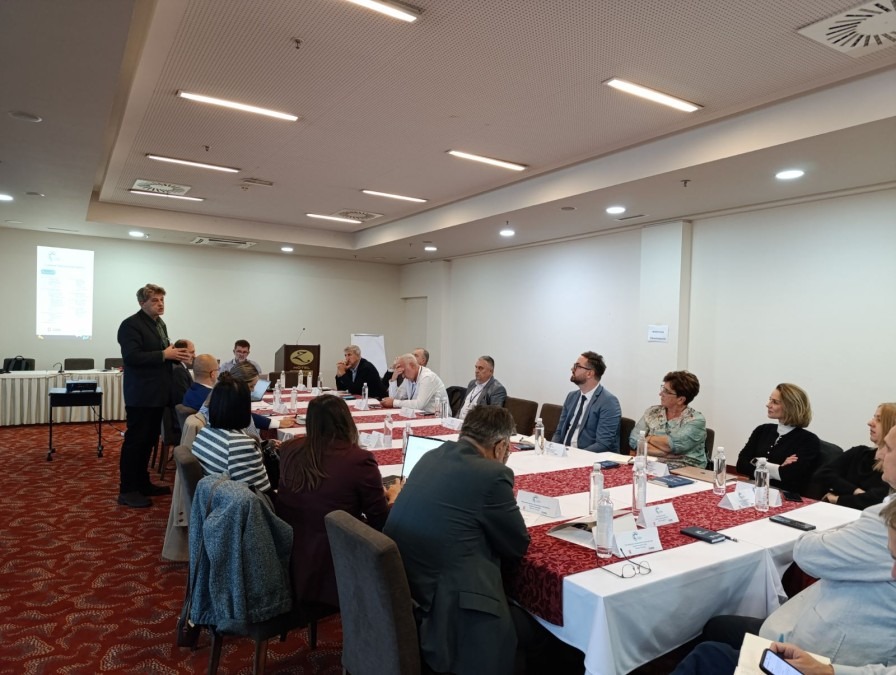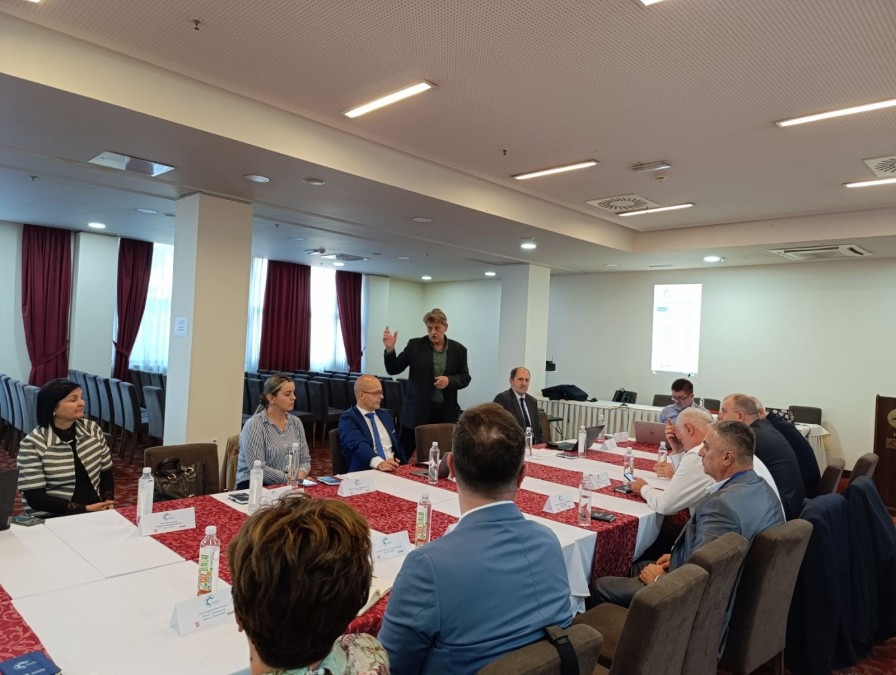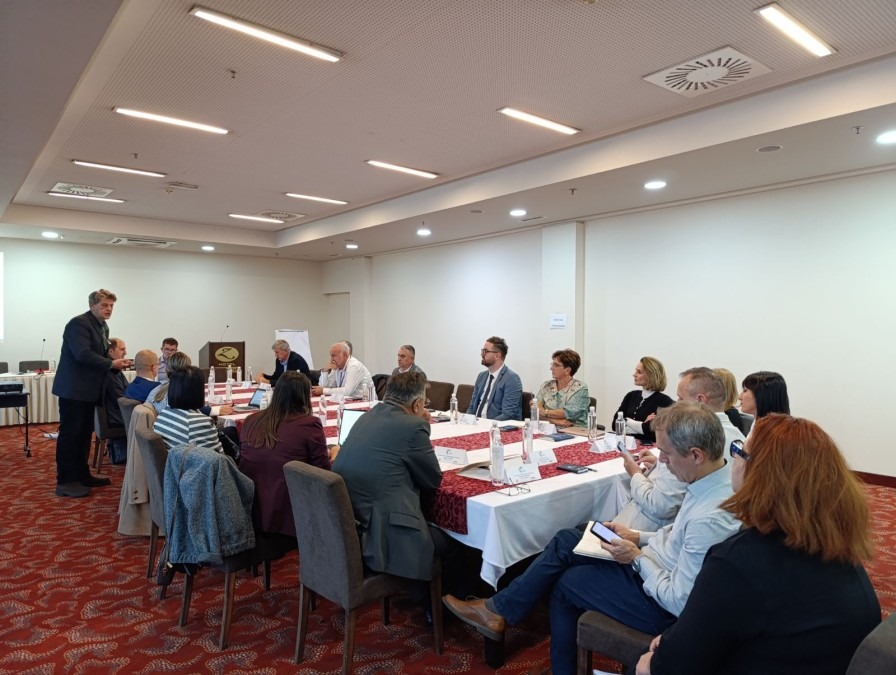
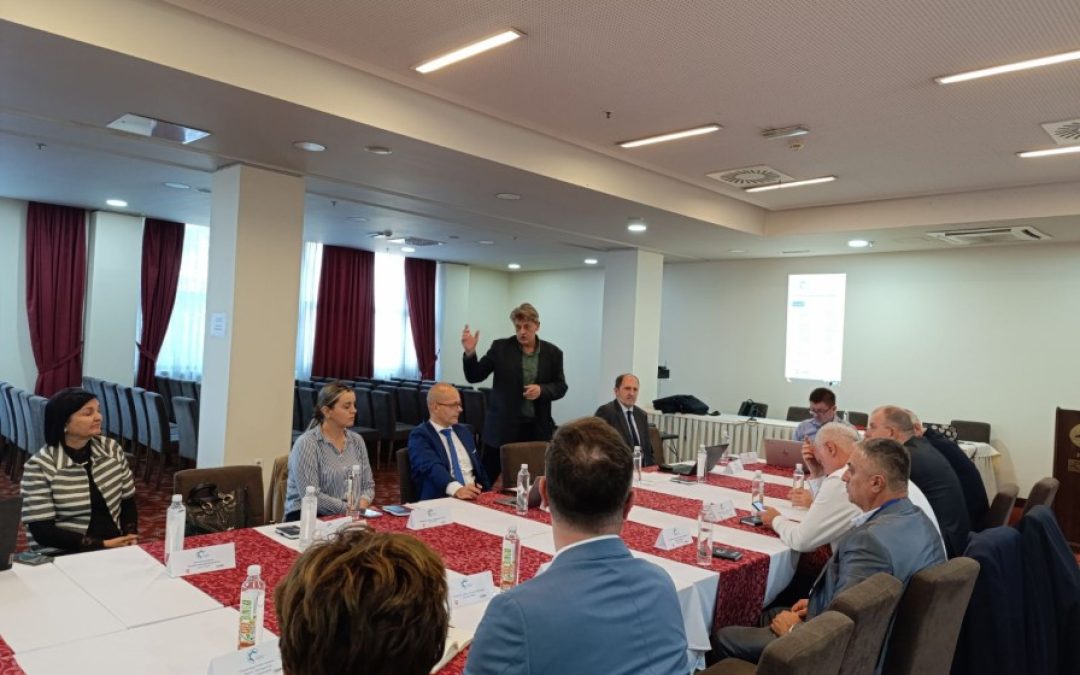
On October 15, 2025, the second regular meeting of the Business Community Council was held at Hotel Zenica, bringing together key representatives of the business sector. The meeting was opened with an introductory speech by Mr. Amir Sarajlić, Key Expert for Public-Private Dialogue. As part of the agenda, an initiative was presented to amend policies relevant to secondary vocational education and training in Bosnia and Herzegovina, with particular emphasis on proposals to amend fiscal regulations and include work-based learning within the labor legislation of the Federation.
Ms. Diana Babić, President of the Chamber of Commerce of Zenica-Doboj Canton, informed participants about the activities of the Intercantonal Working Group and highlighted significant achievements made through the work of the Intercantonal Focus Groups. These include the establishment of a system for the registration and payment of contributions for practical training students, harmonization of regulations between cantons, and the strengthening of cooperation between the education and business sectors to improve secondary vocational education in the Federation. During the discussion, participants had the opportunity to comment on the proposed initiatives and activities of the Intercantonal Working Group.
Mr. Mario Nenadić, President of the Employers’ Federation, addressed the participants and introduced the Cost-Benefit Analysis, aimed at quantifying costs such as mentor salaries, equipment, and productivity, as well as benefits including increased productivity, reduced recruitment costs, improved quality of educational outcomes, and greater readiness to work in modern technological production processes.
The second regular meeting of the Business Community Council also served as a platform for discussing the development of a Digital Registry of Companies for Work-Based Learning. Participants were able to gain a clear understanding of the importance of a unified registry and why such a tool is both useful and necessary for the advancement of work-based learning.
In conclusion, the second regular meeting of the Business Community Council reaffirmed the joint commitment of participants to strengthening partnerships between the education and business sectors, with the aim of creating a sustainable and modern system of secondary vocational education in Bosnia and Herzegovina.