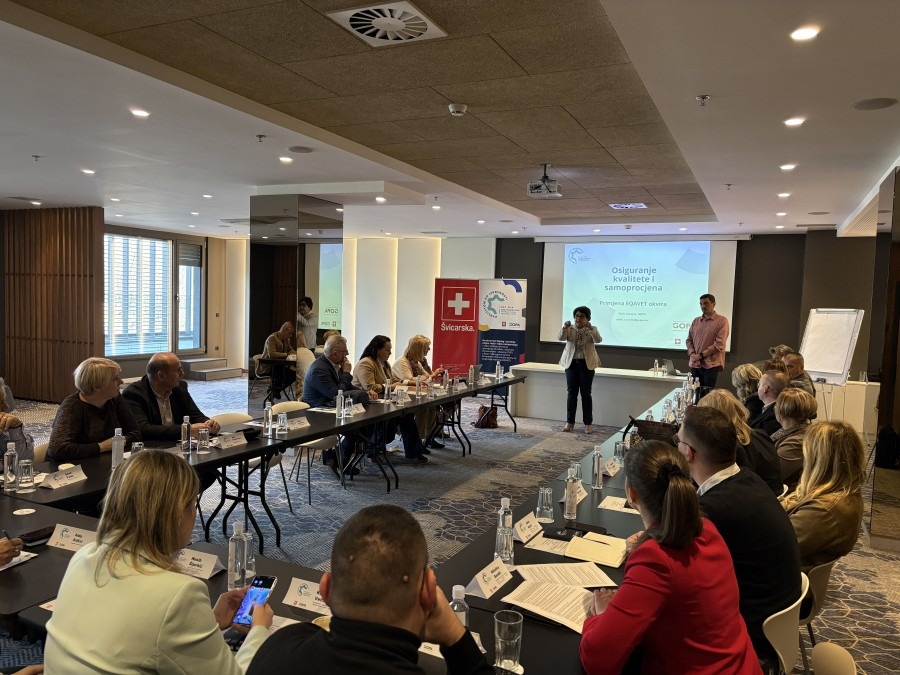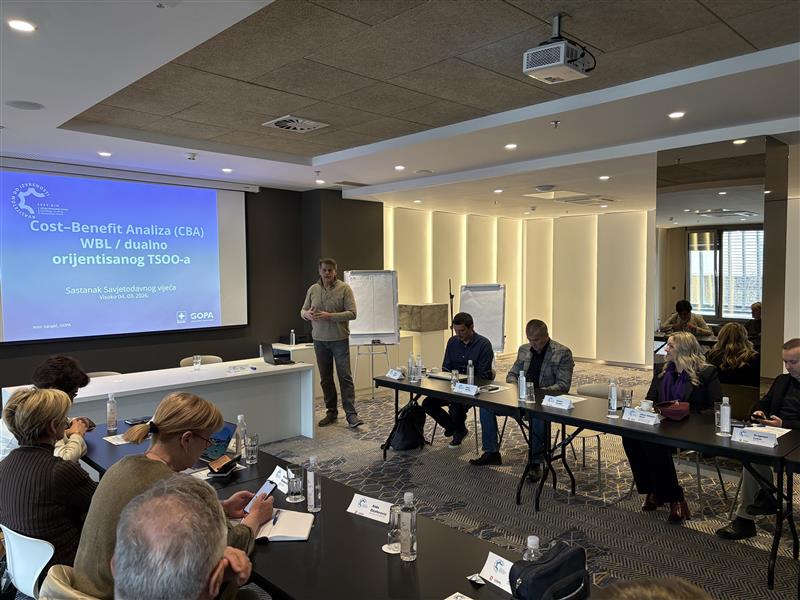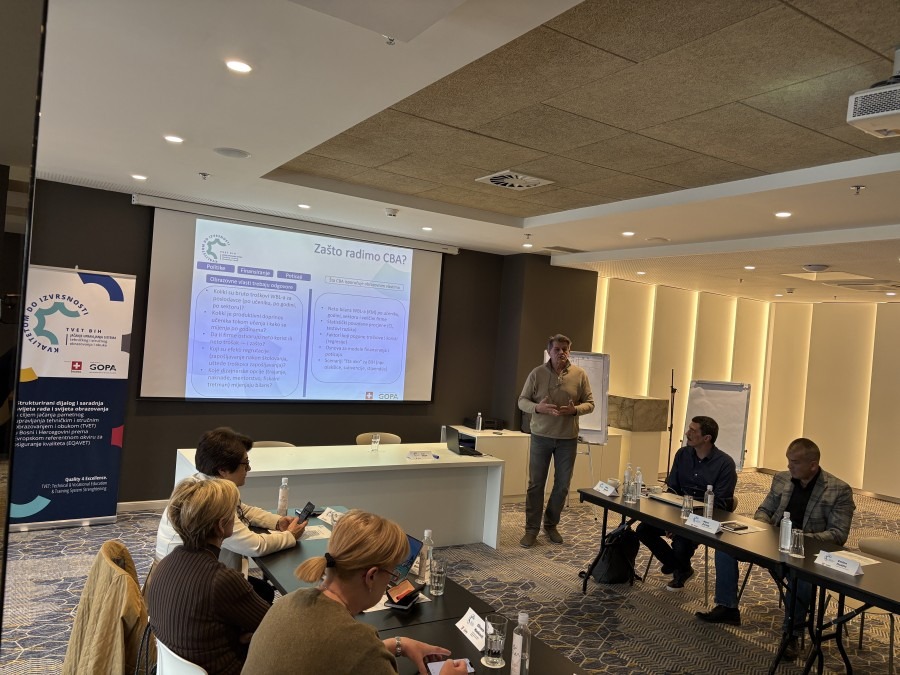
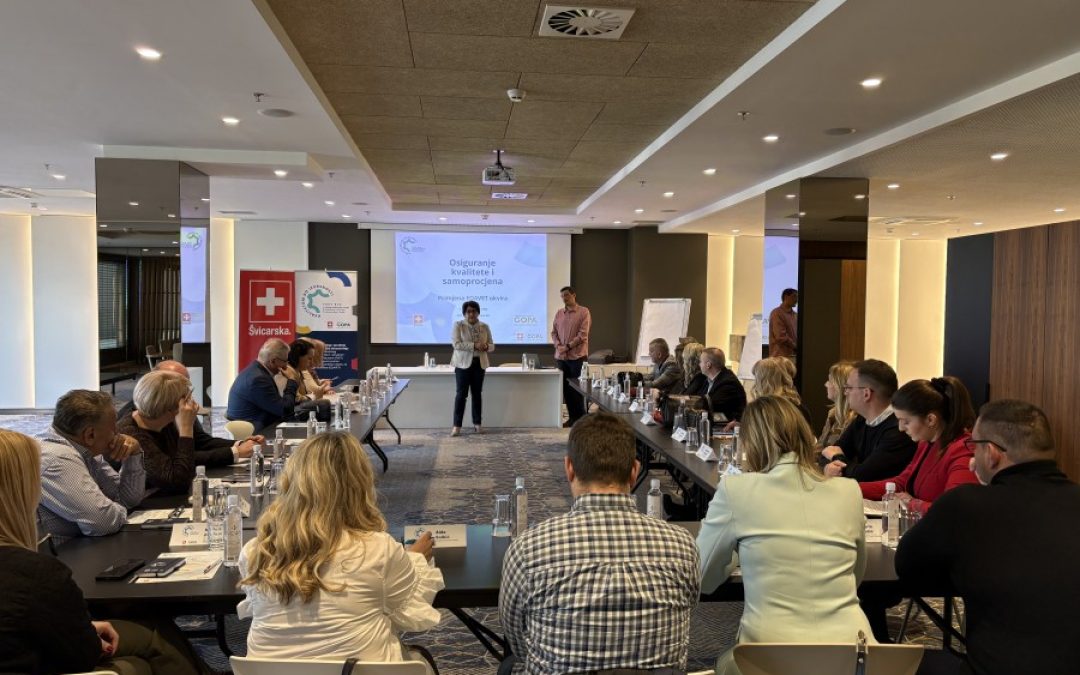
Within the framework of the ongoing Project for Strengthening the Secondary Technical and Vocational Education and Training (TVET) System in Bosnia and Herzegovina, the third meeting of the Advisory Board—composed of representatives of education authorities and institutions—was held in Visoko on 3–4 March 2026.
The purpose of the meeting was to review progress on planned activities and to discuss the needs of education institutions with regard to strengthening system governance and further improving the quality, relevance, and responsiveness of secondary technical and vocational education and training.
Key topics addressed included:
- Quality assurance through the implementation of the EQAVET framework in technical and vocational schools – presentation of progress achieved to date, tools and methodological guidelines for conducting self-assessment, stages of the quality cycle, and the proposed timeline for full implementation in line with European quality assurance standards.
- Evidence-based policy and decision-making – introduction of the VET Barometer, a newly developed instrument for systematic data collection, processing, and analysis to support strategic planning and informed governance within the TVET system.
- Tripartite councils at the level of administrative units as structured governance mechanisms bringing together representatives of public authorities, employers, and trade unions to formulate policies and measures aimed at strengthening the labour market relevance of TVET.
- School-level advisory councils as formal platforms for structured dialogue with the private sector, supporting enhanced school-company cooperation, curriculum review and modernization, and continuous professional development of vocational teachers through industry placements.
- Cost-benefit analysis of work-based learning (WBL) – conducted for the first time in Bosnia and Herzegovina – providing a systemic, data-driven assessment of the costs and benefits incurred when practical training is delivered within companies, thereby contributing to more sustainable WBL models.
- Development of a Digital Platform for Work-Based Learning (WBL), designed to enable structured company registration and verification, accreditation and tracking of in-company mentors, documentation of school-company partnerships, and real-time monitoring of key performance indicators to support quality assurance and system transparency.