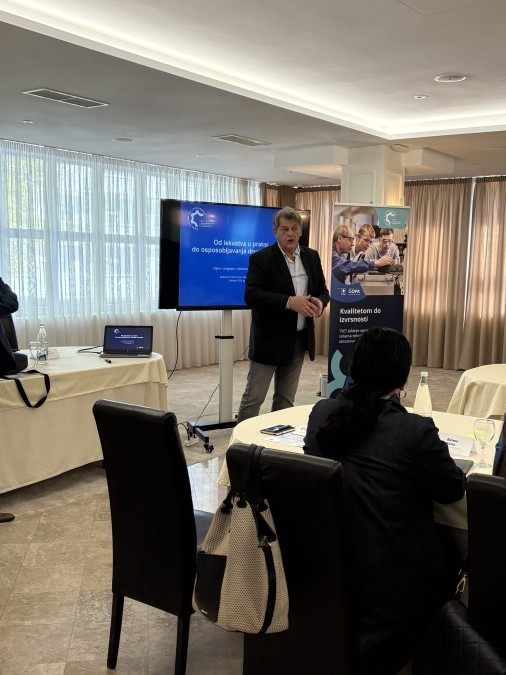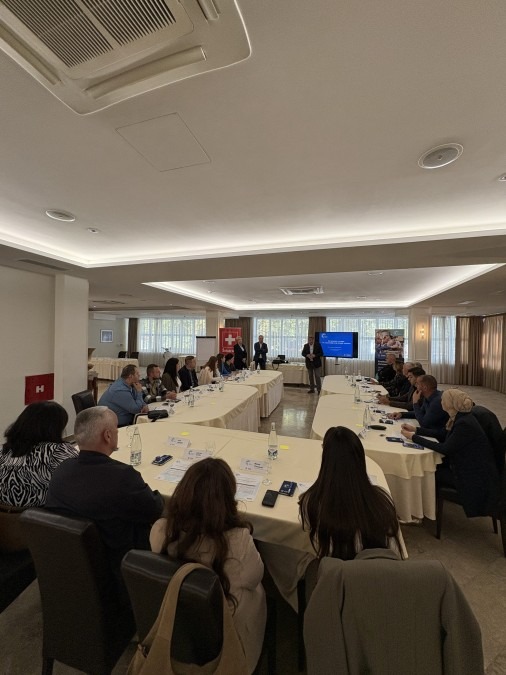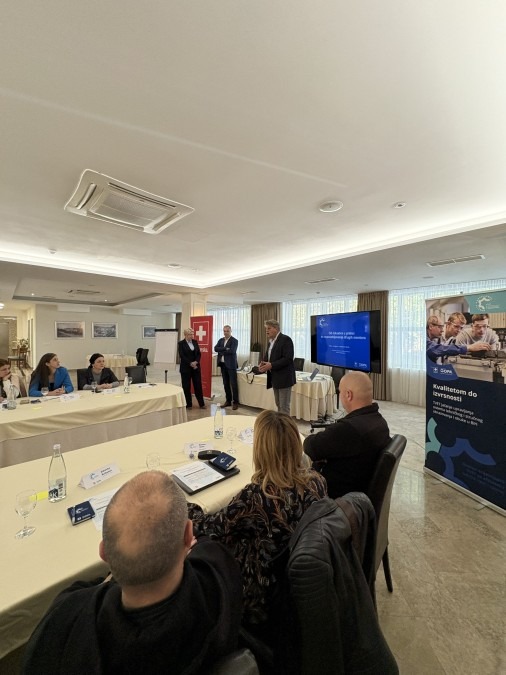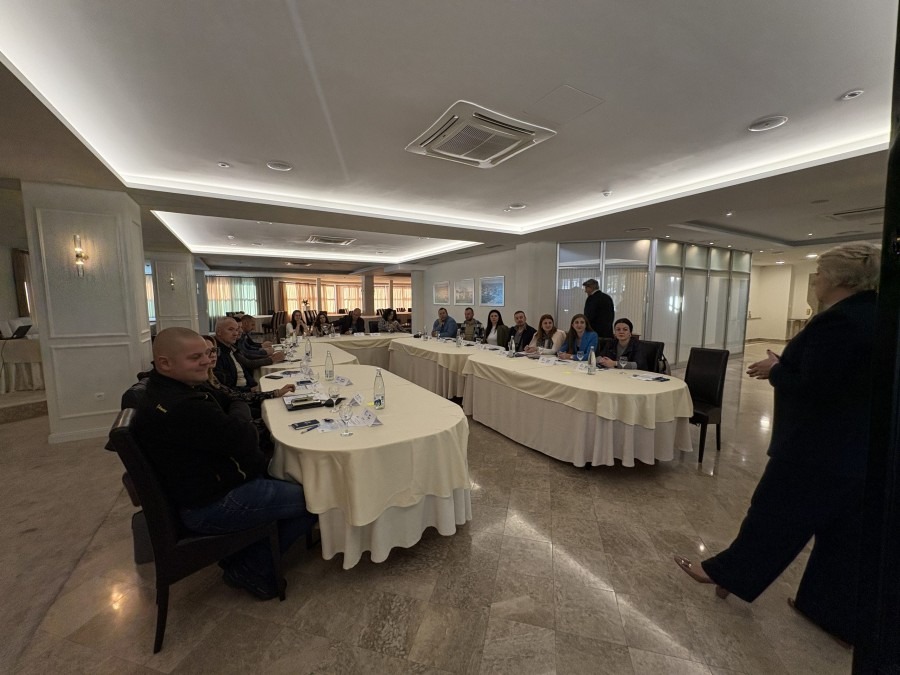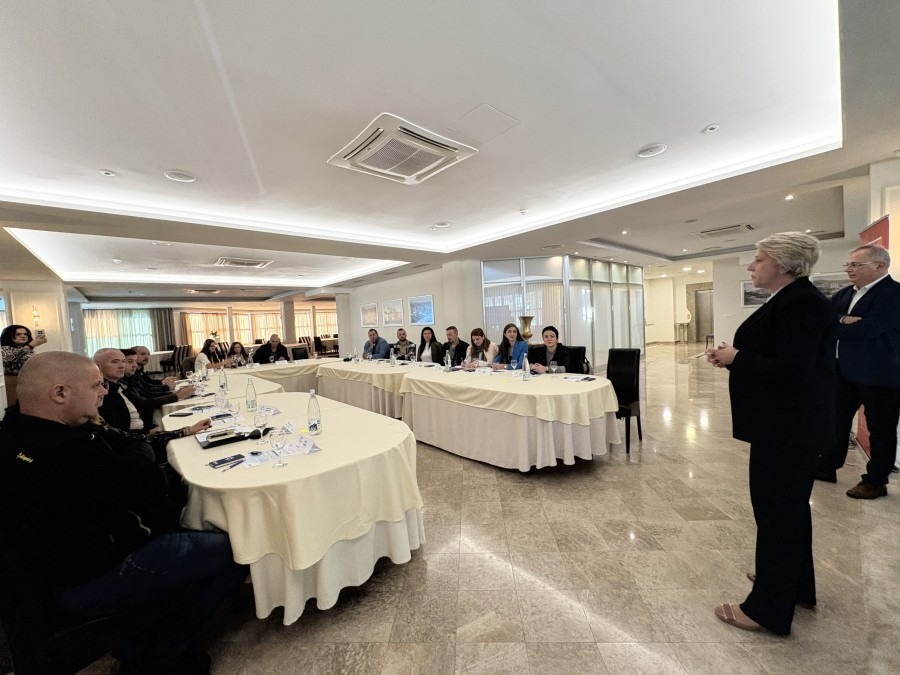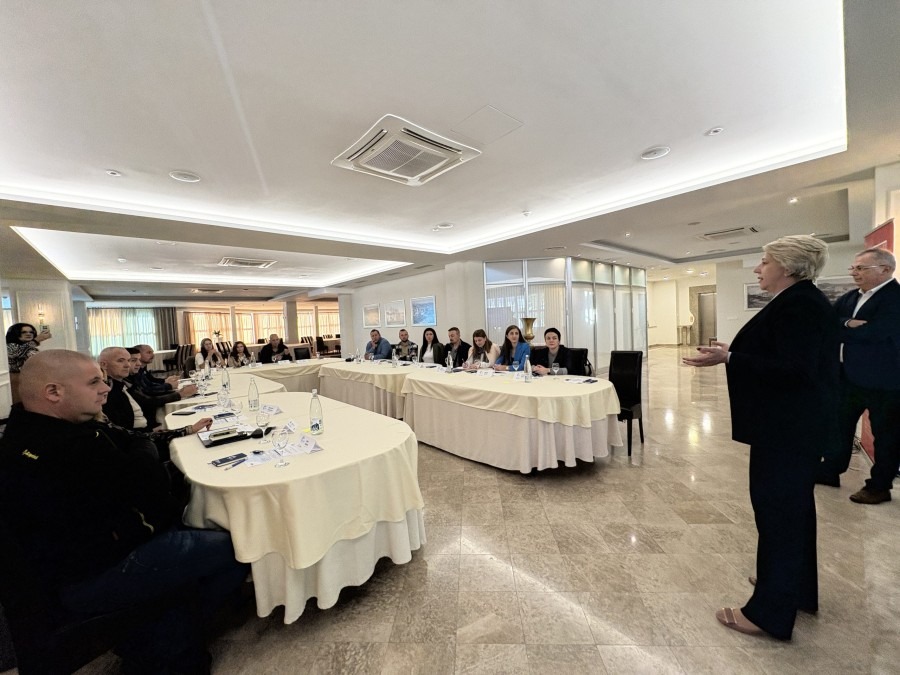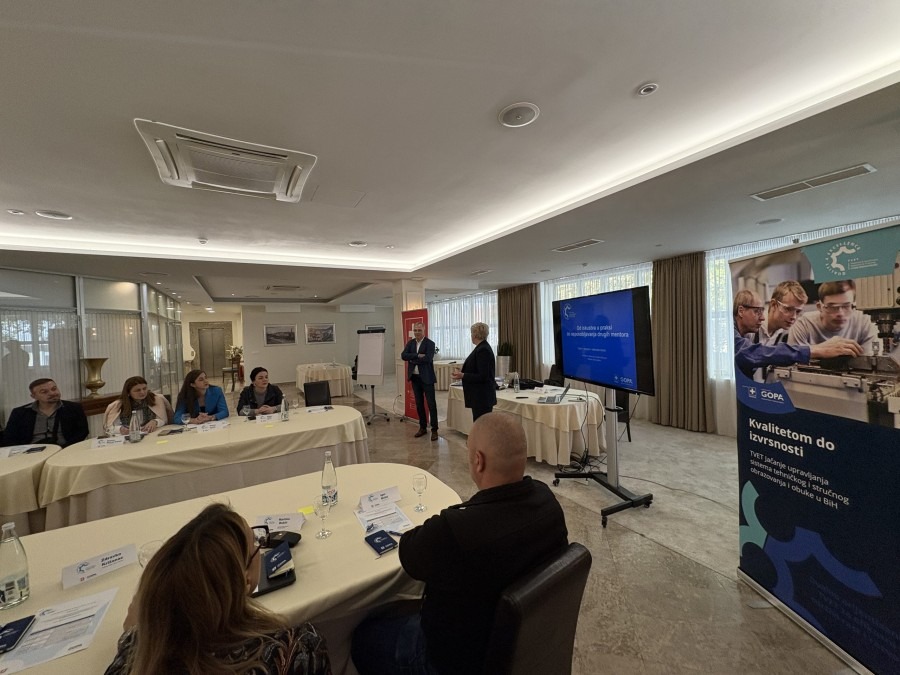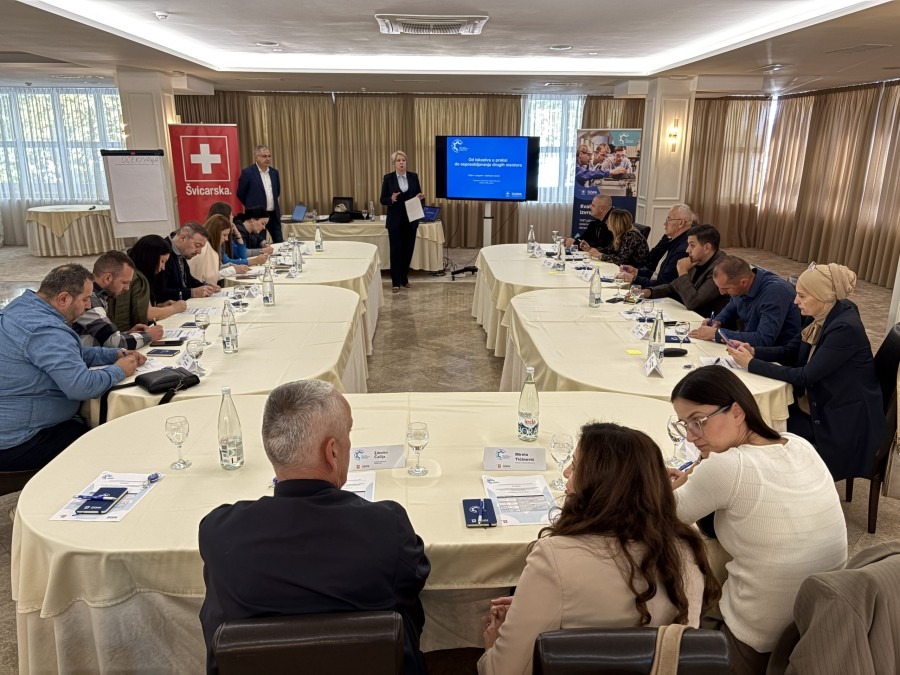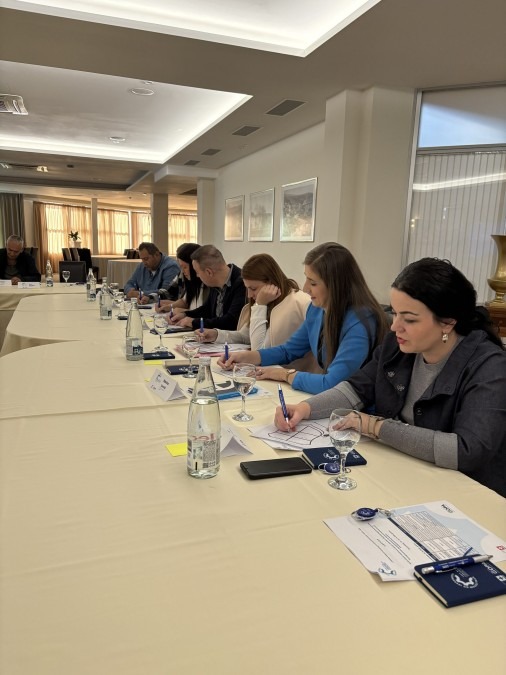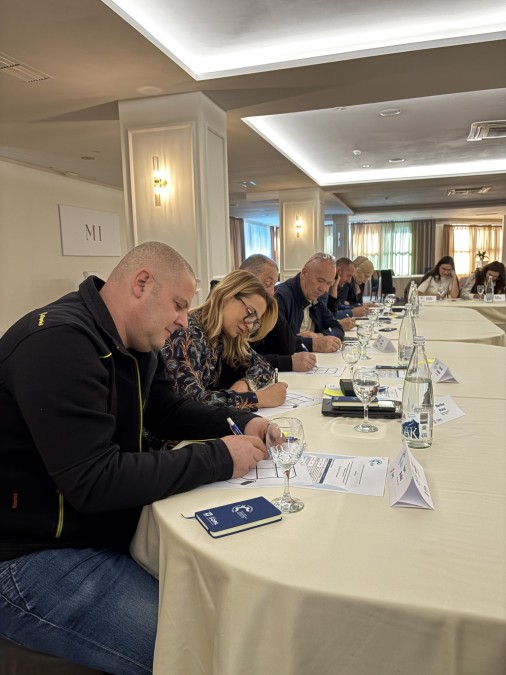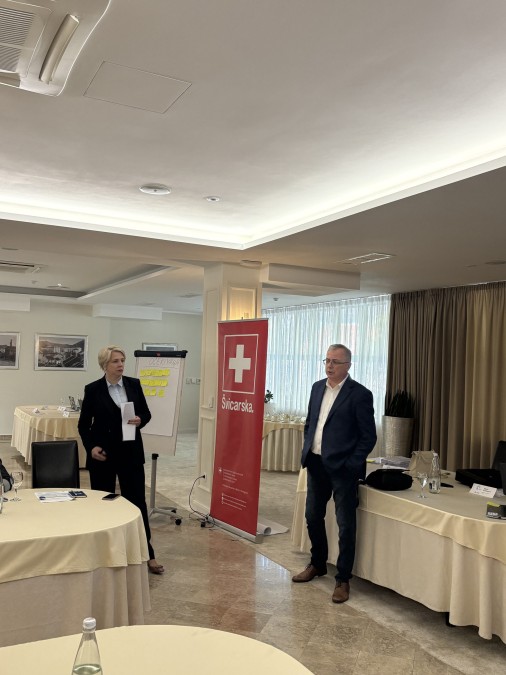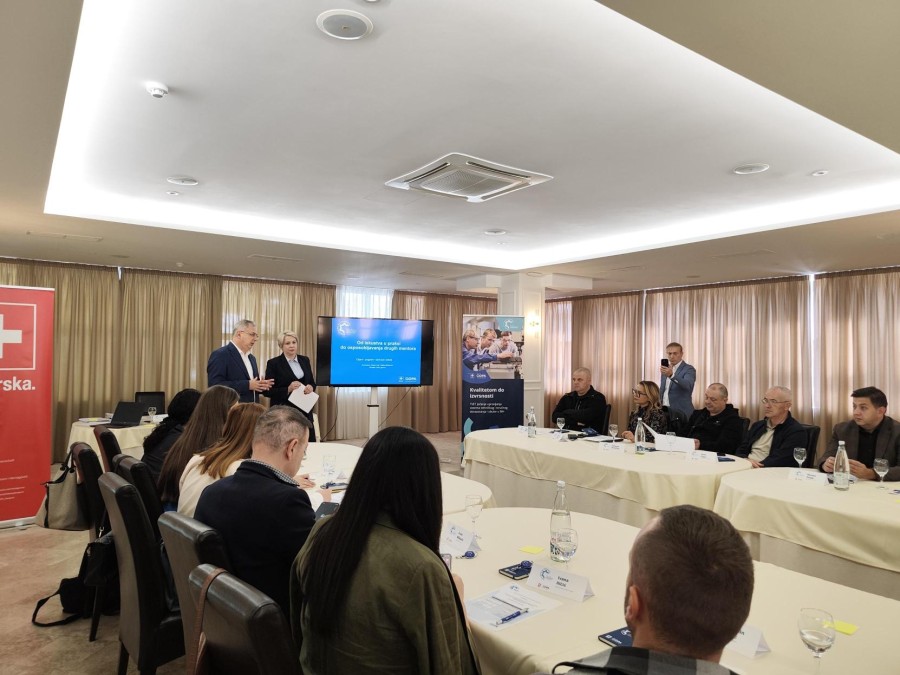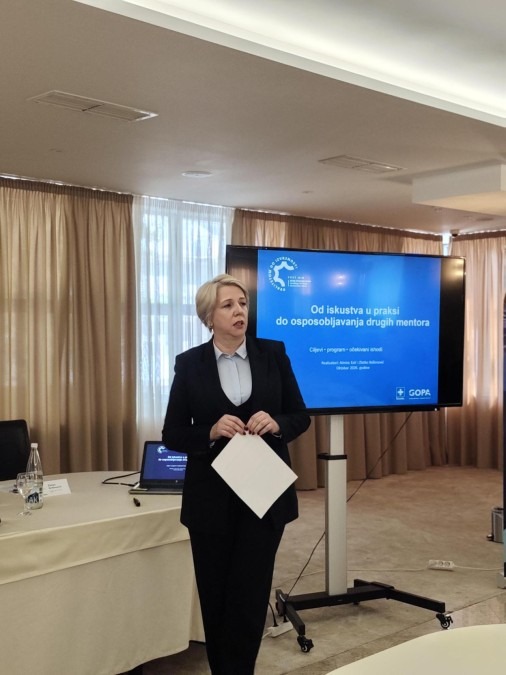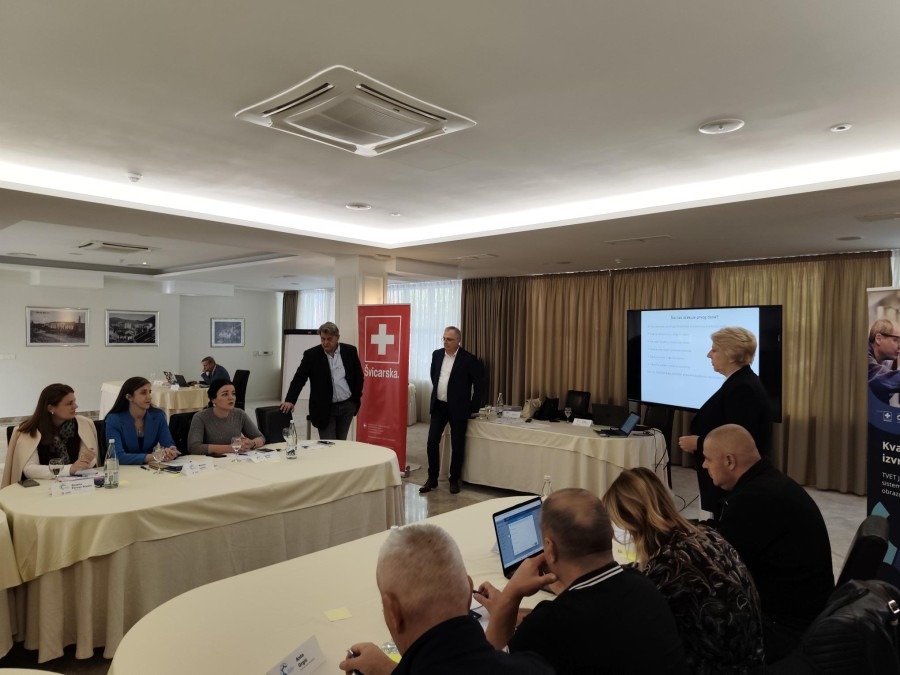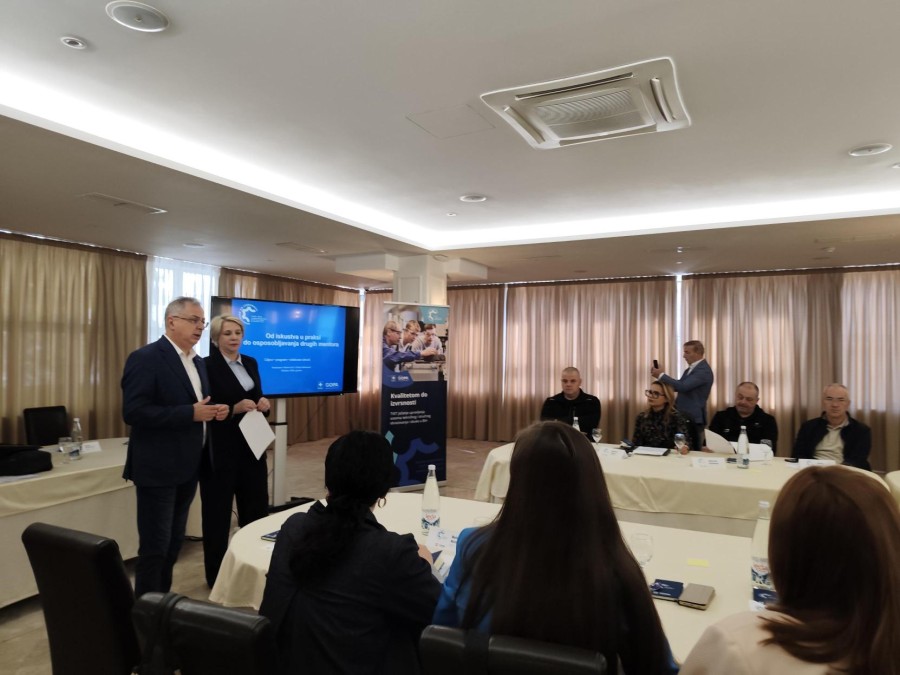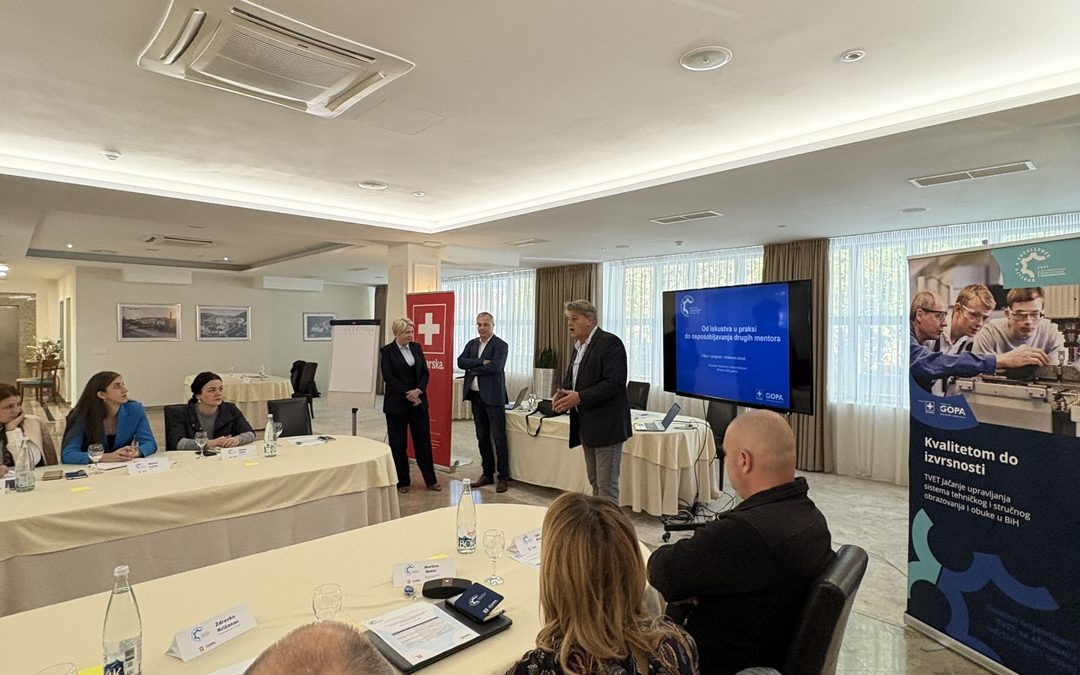
Today, the training of the first group of future master trainers from West Herzegovina Canton, Canton 10 and Central Bosnia Canton commenced in Široki Brijeg. The training will take place from 19 to 21 October 2026.
The programme brings together teachers from vocational and technical schools, representatives of the competent education ministries, and advisors for vocational education and training. Their joint participation is particularly important because the quality of vocational education depends not only on the quality of teaching and practical training, but also on the quality of system governance, clearly defined institutional responsibilities, effective cooperation between schools and businesses, and continuous support for all stakeholders involved in work-based learning (WBL).
The training programme covers:
- The institutional and legal framework for work-based learning and practical training
- The roles of and cooperation between schools, companies, mentors and other stakeholders
- Methodology and the design of adult training through practical exercises and group work
- Communication, presentation and facilitation skills
- Group dynamics management and handling challenging situations
- Quality assurance, reflection and the demonstration of acquired competences
The aim is to equip future master trainers to translate their professional and pedagogical experience into high-quality training and support for in-company mentors, enabling students to benefit from structured, safe and high-quality learning in real workplace environments.
However, the training of master trainers is only one part of the broader picture of vocational education and training quality. The key challenge is not simply to launch effective activities, but to ensure their continuity, institutional ownership and sustainability beyond the completion of individual projects.
A sustainable work-based learning system requires the simultaneous development and integration of several elements: an appropriate legal and institutional framework, the training of in-company mentors, clear standards and quality assurance mechanisms, continuous professional development and support for mentors and master trainers, a sustainable model for their engagement, and effective cooperation between schools and the business community, supported by a Digital Platform for Work-Based Learning. The platform will facilitate stakeholder cooperation, improve access to information, support process monitoring and contribute to the long-term sustainability of the system.
This is precisely why the joint involvement of practitioners from the classroom and representatives of institutions is so important. Only by bringing them together can individual activities evolve into a functional and sustainable vocational education and training system.
The goal is not simply to have more trained mentors. It is to build a system in which high-quality mentoring is continuous, institutionally supported and firmly embedded in the overall quality of vocational education and training.